

Choosing a moss wall is not only about picking the greenest option. Reindeer moss, forest moss and pillow moss all have a different texture, depth and overall look. This is why understanding the types of moss wall available can make a big difference before choosing one for your home, office, hotel, café or commercial space.
If you want a soft, fluffy and more textured wall, reindeer moss can be a great choice. Forest moss gives a dense and smooth green appearance, while pillow moss creates a more raised and three-dimensional look.
In this guide, we will compare these three types of moss wall, where each one works best, what makes them different, their maintenance requirements and how you can choose the right moss wall for your space.
About Moss Walls
A moss wall is a decorative wall installation made using preserved moss and other natural preserved elements. Unlike a living green wall, preserved moss does not need regular watering, soil or sunlight to stay green. The moss is treated during the preservation process so that it can retain its natural appearance and soft texture for a long time.
When looking at different types of moss wall, three options that are commonly considered are reindeer moss, forest moss and pillow moss. Each one gives a different visual result:
- Reindeer moss has a soft, branching and fluffy appearance. It adds movement and organic texture.
- Forest moss has a denser, flatter and velvety appearance, creating a clean green background.
- Pillow moss has a rounded, raised appearance that gives the wall more depth and a three-dimensional look.
So, while all three belong to the same category of preserved moss walls, they do not create the same look.
One of the biggest reasons people choose preserved moss is that it brings natural texture into a space without the everyday work associated with living plants. A well-designed moss wall can turn a plain wall into a feature without making the space feel overcrowded. It can be used in homes as well as commercial interiors:
- Living room feature walls
- Office reception areas
- Hotel lobbies
- Restaurant and café interiors
- Corporate offices
- Retail spaces
- Conference rooms
- Staircase walls
- Waiting areas
- Bedrooms and home offices
- Brand and logo walls
The different types of moss wall can also be combined in one installation. For example, forest moss can create the base, while reindeer moss and pillow moss can be added to introduce texture and depth.
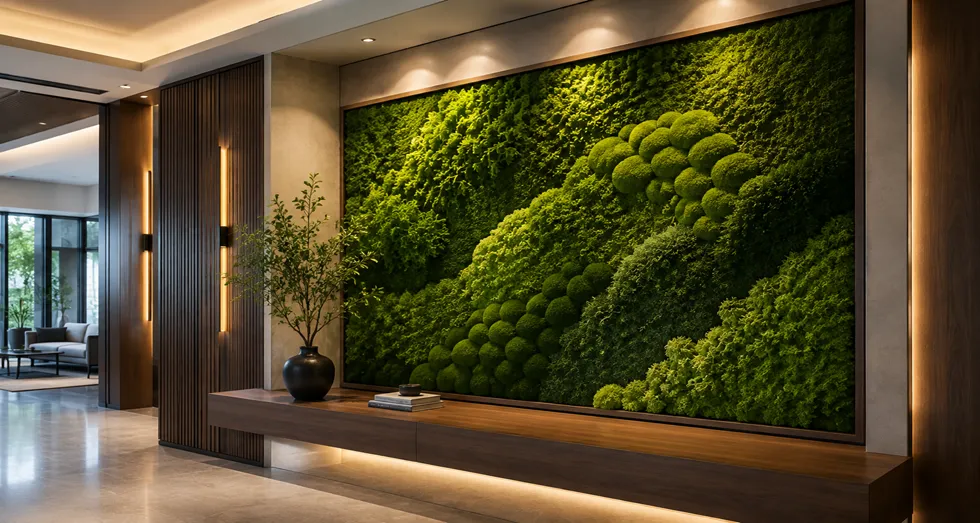
Types of Moss Walls: Reindeer, Forest, and Pillow Moss
1. Reindeer Moss
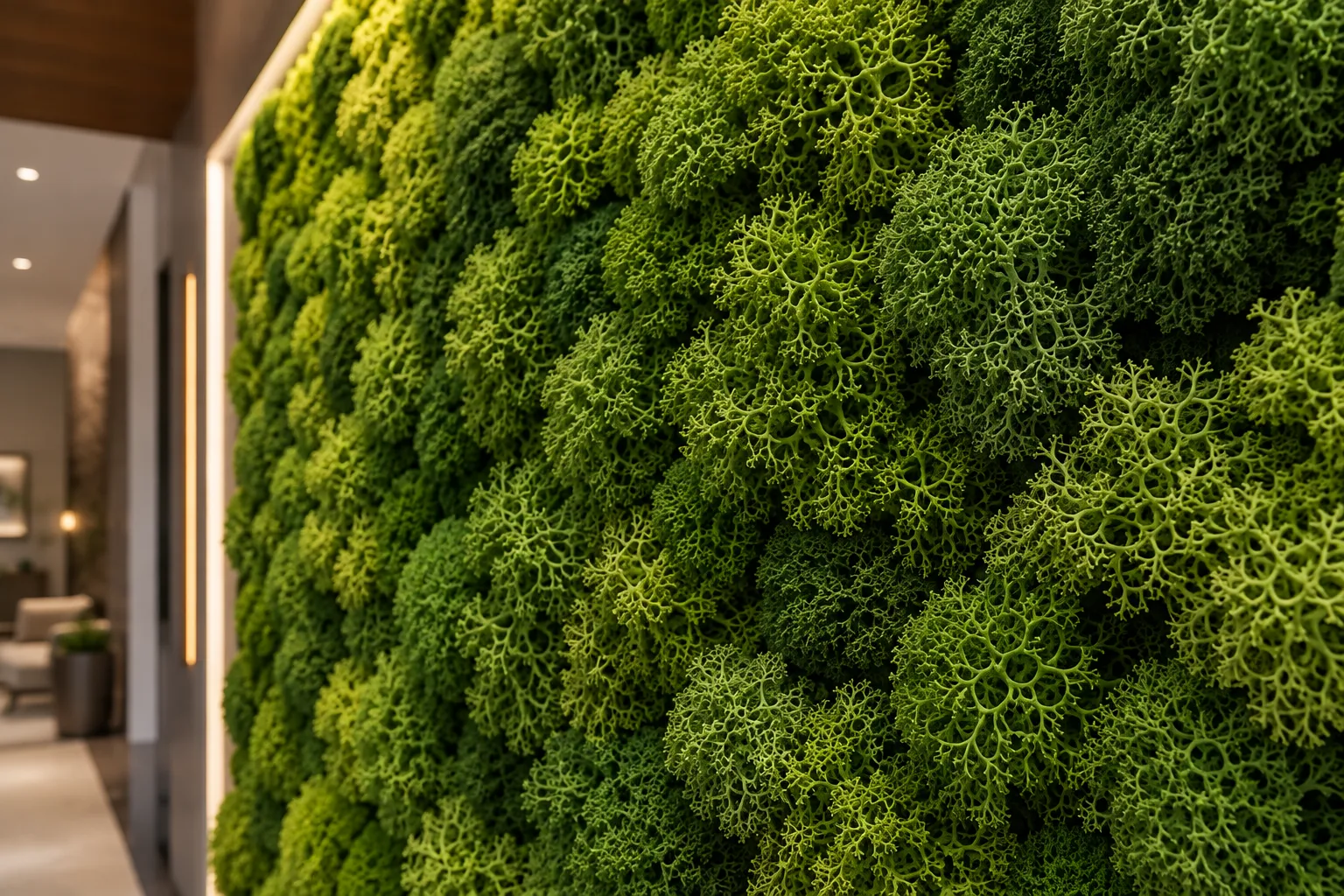
Reindeer moss is one of the most recognisable materials used in preserved moss wall designs. Technically, reindeer moss is a lichen rather than a true moss, but it is widely used as a moss wall material.
Its texture is soft, airy and slightly cloud-like. Instead of creating a completely flat surface, it gives the wall visible volume and movement.
Reindeer moss works particularly well when you want:
- A soft and natural appearance
- More visible texture
- Colour variation
- A modern biophilic feature wall
- Custom patterns and designs
- A lighter, more open moss texture
If your priority is texture, reindeer moss is an excellent choice.
2. Forest Moss
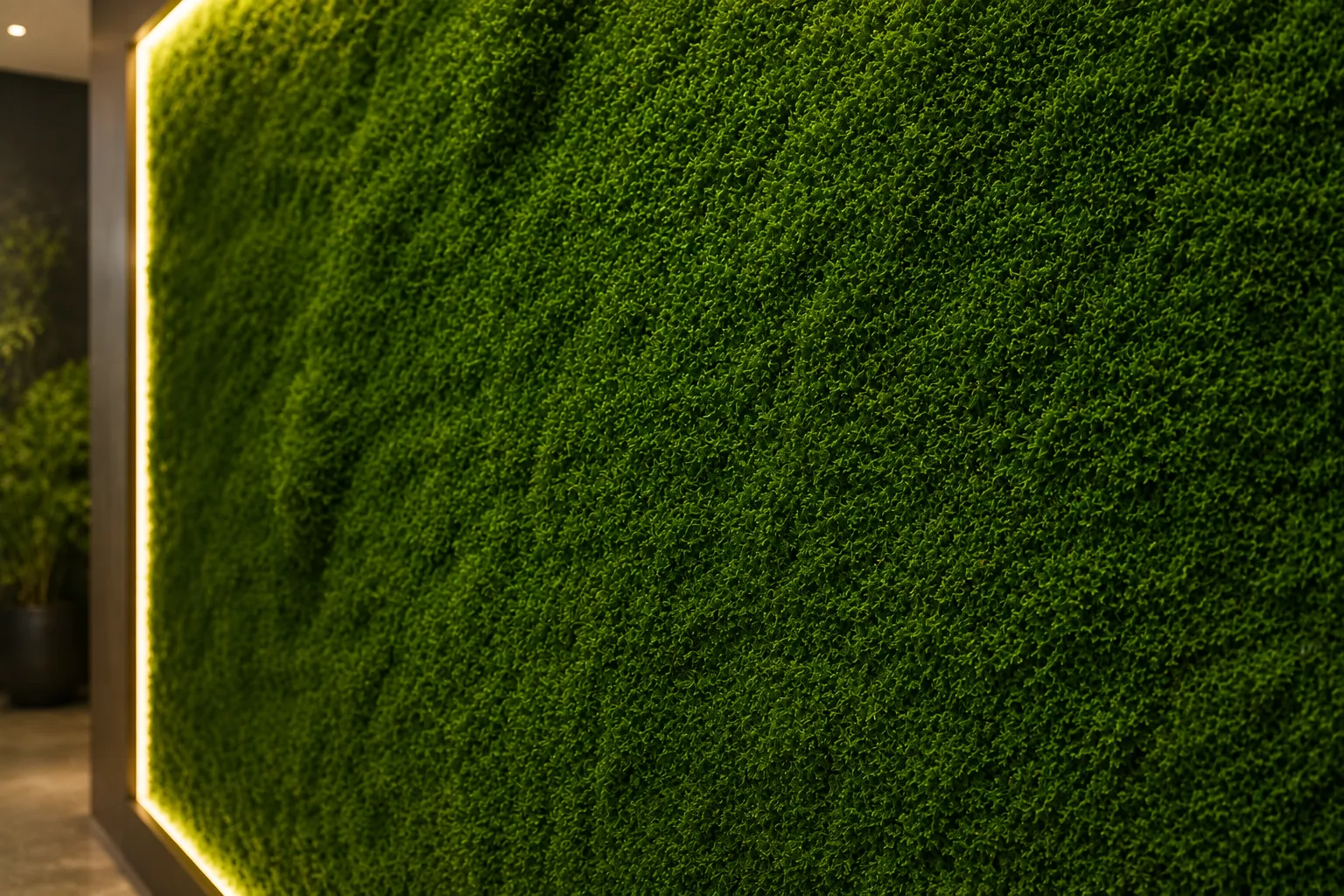
Forest moss has a denser and more compact appearance. Compared with reindeer moss, it looks flatter and more uniform, giving the wall a clean and architectural finish.
This makes forest moss useful when you want the greenery to act as a background rather than the entire design being about texture.
Forest moss works well for:
- Large feature walls
- Office interiors
- Reception areas
- Minimalist interiors
- Green backgrounds
- Logo walls
- Calm and sophisticated spaces
Among the different types of moss wall, forest moss is a good option if you prefer a cleaner and more controlled appearance.
3. Pillow Moss
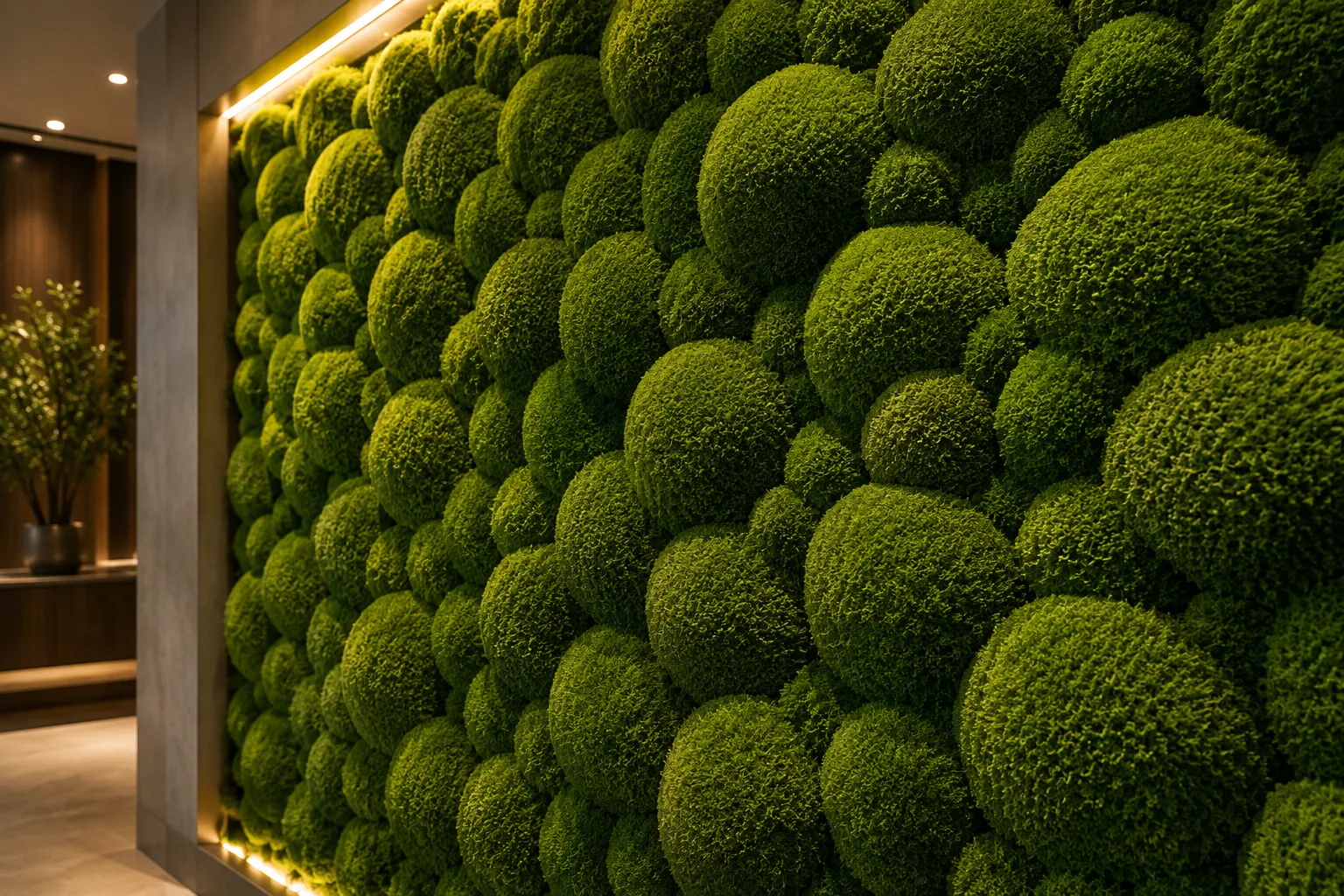
Pillow moss gives you something different. Instead of looking flat or fluffy, it creates rounded, cushion-like forms across the wall.
The raised sections create small shadows and make the wall feel more three-dimensional. This can be especially effective when the moss wall is meant to be the main visual feature of the room.
Pillow moss works well for:
- Luxury interiors
- Statement walls
- Hotel and hospitality spaces
- High-end offices
- Organic feature designs
- 3D moss wall compositions
If you want your wall to have visible depth rather than a simple green surface, pillow moss is worth considering.
Cost & Pricing Factors
The cost of a moss wall is not decided only by the type of moss. When comparing different types of moss wall, the final price can depend on several factors, including:
- Size of the wall
- Type of moss selected
- Density of moss
- Number of moss varieties used
- Custom patterns
- Colour combinations
- Logo or branding requirements
- Base and backing material
- Installation requirements
- Location of the project
- Accessibility of the installation area
A simple forest moss wall may have a different cost from a highly detailed installation combining reindeer moss, pillow moss and preserved foliage.
For this reason, it is better to decide the design first and then get a project-specific quotation instead of comparing moss only by price per square foot.

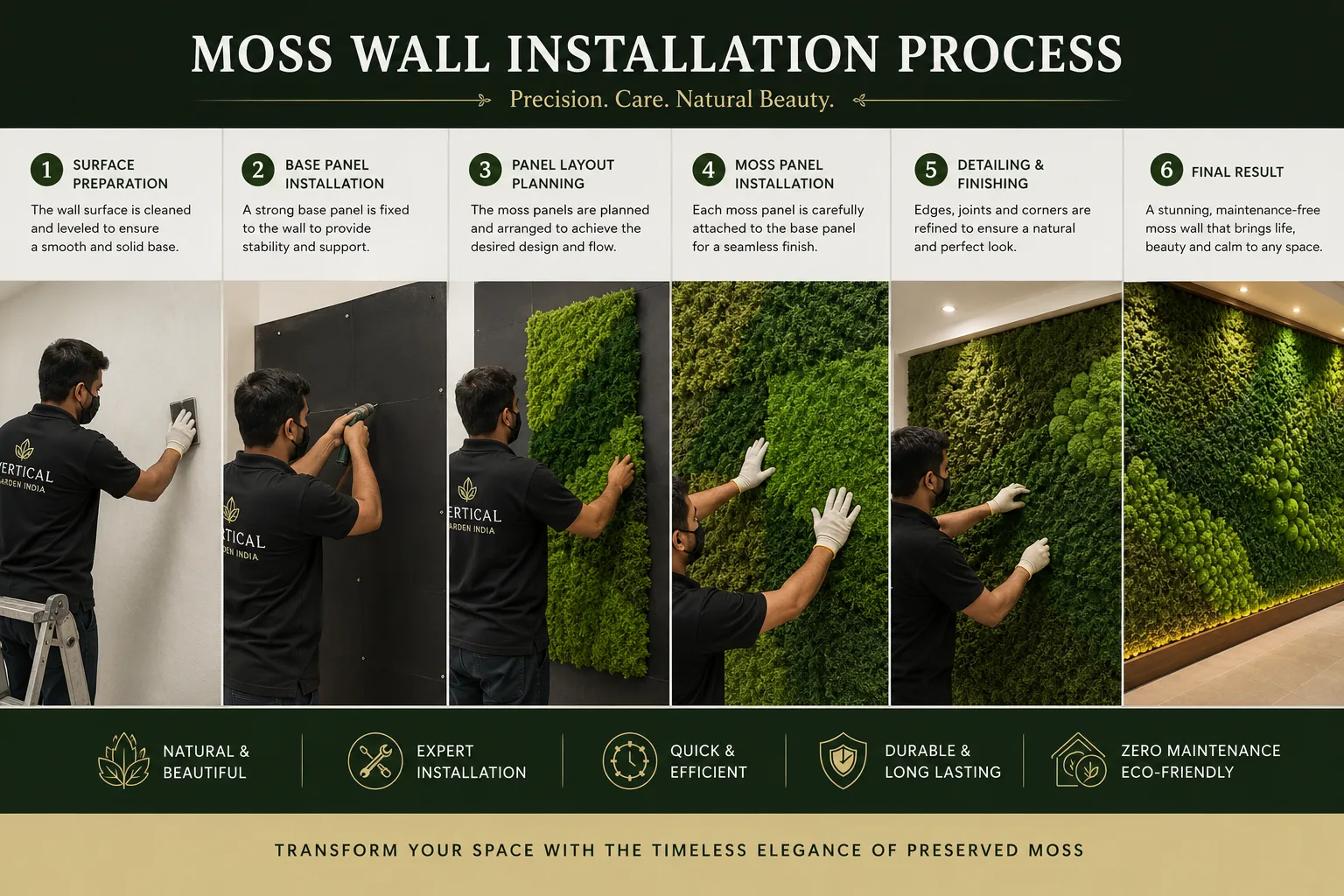
Moss Wall Installation Process
The installation process depends on the wall size, design and selected types of moss wall.
- The wall area is measured and checked to understand the available surface and installation requirements.
- The design is planned according to the space and the moss varieties are selected.
- The prepared moss is fixed onto the appropriate backing system.
- The moss is arranged carefully to achieve the required density, texture and pattern.
- The completed wall is checked so the finish works with the surrounding architecture, lighting and furniture.
Moss Wall Maintenance Tips
One of the main advantages of preserved moss is that it needs very little day-to-day maintenance. You do not need to water it, trim it or treat it like a living plant. Preserved moss does not grow, so there is no regular pruning or irrigation requirement.
It is important to:
- Keep preserved moss away from direct and strong sunlight
- Avoid watering or spraying the moss
- Keep it away from excessive moisture
- Avoid repeatedly touching or pulling the moss
- Remove dust gently when required
- Avoid placing it near strong heat sources
The maintenance requirements are broadly similar across the main types of moss wall, although the exact care recommendations can vary according to the material and installation.
Why Choose Vertical Garden India?
Vertical Garden India offers preserved moss wall solutions using different moss textures, including premium reindeer moss, classic forest moss and pillow / bun moss. These materials can be used individually or combined to create customised biophilic wall designs.
The right installation team can also help you decide which types of moss wall will suit your space instead of simply recommending the same material for every project.
Whether you are planning a feature wall for a luxury home in Delhi, a corporate office in Mumbai, a hotel in Bangalore, or any commercial property across India, the design can be planned around the existing architecture, colours and purpose of the space.
Relevant service: Moss Wall Installations
FAQs
Which is better, reindeer moss or forest moss?
It depends on the look you want. Reindeer moss has a softer and more textured appearance, while forest moss gives a dense and velvety finish. If you want more noticeable texture, reindeer moss can be a better choice. If you prefer a clean green background, forest moss may work better.
Is pillow moss the same as reindeer moss?
No. They have different textures and create different visual effects. Reindeer moss has a softer, branching texture, while pillow moss forms rounded, raised shapes that create more depth.
Which type of moss wall is best for an office?
Forest moss is a good option for offices when you want a clean and professional green background. Reindeer moss can be added when you want more texture or a stronger feature wall.
Can different types of moss wall be combined?
Yes. Combining reindeer moss, forest moss and pillow moss can create more texture, contrast and depth. Mixed moss compositions are often used for custom feature walls.
Do moss walls need water?
No. Preserved moss walls do not need regular watering. They are preserved materials rather than living green walls.
Can a moss wall be installed outdoors?
Preserved moss is generally designed for controlled indoor conditions and should be protected from direct sunlight, excess moisture and harsh environmental exposure. For an outdoor project, the material and application should be assessed specifically before installation.
How long does a preserved moss wall last?
The lifespan depends on the moss quality, preservation process and environment. Keeping the installation away from direct sunlight, excessive humidity and physical contact helps maintain its appearance for longer.
Which of the three types of moss wall has the most texture?
Reindeer moss provides a soft and branching texture, while pillow moss provides more raised and three-dimensional depth. If you want both texture and depth, combining reindeer moss with pillow moss can create a stronger visual effect.
Ready to Transform Your Space?
Choosing between reindeer moss, forest moss and pillow moss does not have to be complicated.
- Soft and textured? Choose reindeer moss.
- Dense and refined? Choose forest moss.
- Deep and three-dimensional? Choose pillow moss.
And if you want something more customised, different types of moss wall can be combined to create a feature that feels unique to your space. For larger commercial projects, installation is generally planned around the existing interior so that lighting, furniture, branding and architectural elements work together with the moss wall.
Looking for the right type of moss wall for your project? Contact Vertical Garden India for a consultation and customised moss wall solution.
Visit Vertical Garden India — Moss Wall Service


